

Why Abdominal and Pelvic Health Matter
The abdomen is home to several of the body’s most important systems. Within this relatively small region are the digestive organs, reproductive organs, bladder, major immune tissues, and a large network of nerves that connect the gut to the brain. When these systems function well, they support digestion, metabolism, hormonal balance, immune function, and overall wellbeing. When they become disrupted, the effects can be widespread.
Many common health concerns originate in, or strongly involve, the abdominal and pelvic region. Conditions such as digestive disorders, menstrual pain, bladder dysfunction, and pelvic pain affect millions of people and can significantly impact daily life. In many cases, these conditions involve complex interactions between inflammation, circulation, nerve signaling, and tissue health.
Because of this complexity, researchers have increasingly explored non-invasive approaches that support the body’s natural repair and regulatory processes. One area of growing interest is Red Light Therapy (RLT), using red and near infrared light. These wavelengths of light interact with cells in ways that can influence energy production, inflammation, circulation, and tissue recovery.
In recent years, scientists have begun studying how these effects may apply not only to skin and muscles, but also to deeper tissues within the abdomen and pelvis. This emerging research is opening the door to new ways of supporting digestive health, reproductive health, bladder function, and recovery from abdominal injury.

How Red and Near Infrared Light Affect Abdominal Tissues
Red and near infrared light therapy works by delivering specific wavelengths of light that interact with cells and tissues. When these wavelengths are absorbed by cellular structures, they can influence several biological processes involved in energy production, circulation, inflammation, and tissue repair.
One of the most studied mechanisms involves the mitochondria, the structures within cells responsible for producing energy. Red and near infrared light are absorbed by molecules within the mitochondrial respiratory chain, which can improve cellular energy production and support normal metabolic function. Increased cellular energy can help tissues repair, recover, and function more efficiently.
These wavelengths of light can also influence nitric oxide signaling in the body. Nitric oxide is a molecule that helps regulate blood flow and circulation. When circulation improves, tissues receive more oxygen and nutrients while metabolic waste products are cleared more efficiently. This effect may be particularly relevant in the abdomen and pelvis, where many conditions involve impaired circulation or chronic inflammation.
Another important effect of red and near infrared light therapy is its ability to modulate inflammation. Numerous studies have shown that these wavelengths can influence inflammatory signaling pathways and support the body’s natural healing processes. Because many abdominal and pelvic conditions involve inflammatory mechanisms, researchers have increasingly explored light therapy as a potential supportive tool.
Near infrared wavelengths are especially relevant for abdominal applications because they penetrate deeper into tissue than visible red light. This allows light energy to reach structures beneath the skin, including muscles, connective tissue, and deeper organs within the abdominal region.
The Fringe Abdominal Belt uses three wavelengths that have been widely studied in light therapy research. The device delivers red light at 660 nm along with near infrared light at 850 nm and 1050 nm. Together, these wavelengths are designed to support both surface tissues and deeper structures within the abdomen and pelvis, and to have broad effects on cells and other structures in the abdomen (such as water).

Introducing the Fringe Abdominal Belt
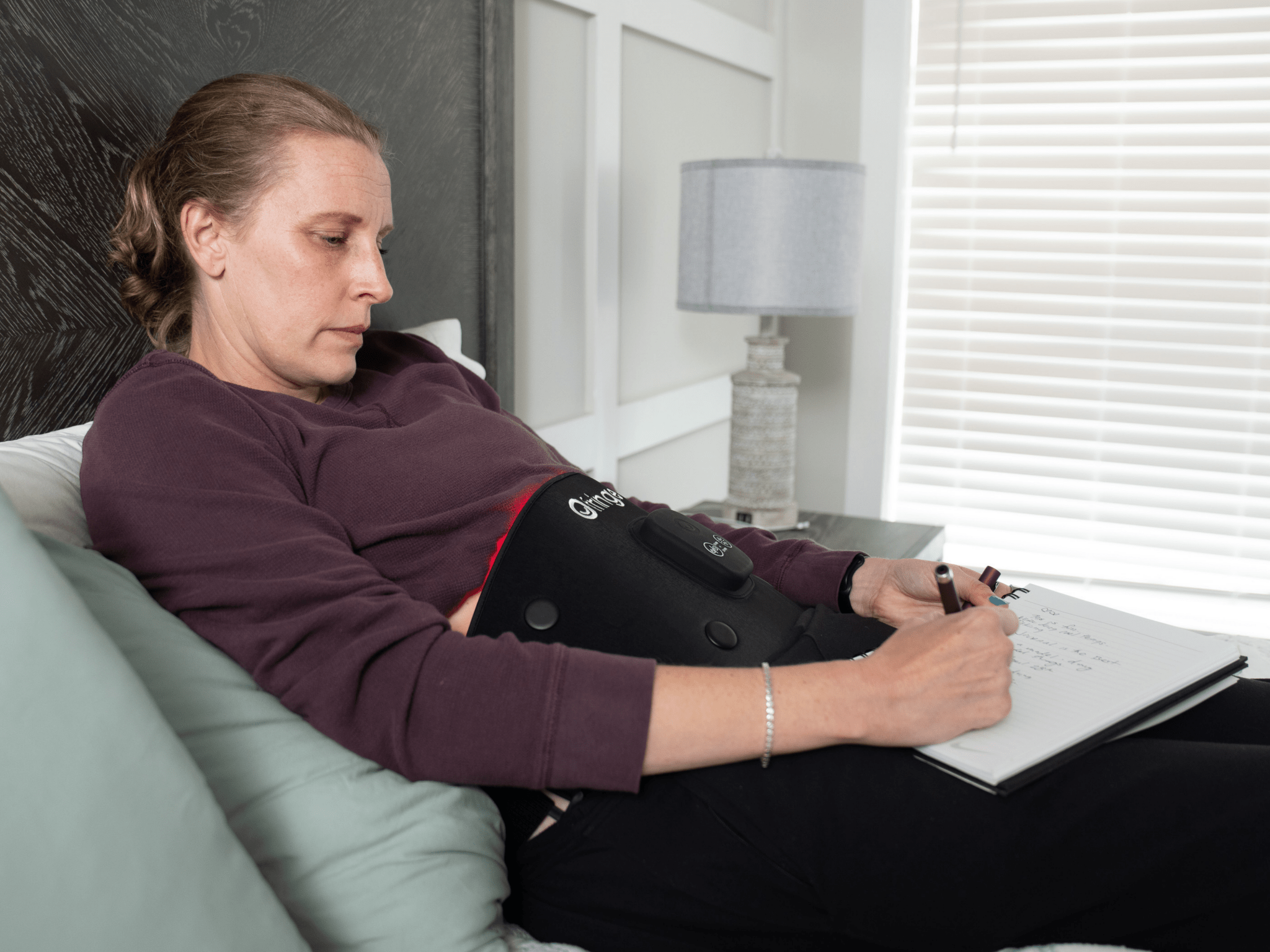
The Fringe Abdominal Belt was designed to deliver red and near infrared light therapy directly to the abdominal and pelvic region in a simple, comfortable format.
The device contains 135 LEDs that emit three wavelengths of therapeutic light: red light at 660 nm and near infrared light at 850 nm and 1050 nm. These wavelengths have been widely studied for their ability to support cellular energy production, circulation, tissue repair, and inflammation balance. While red light primarily interacts with tissues closer to the surface, near infrared light penetrates more deeply, allowing light energy to reach muscles, connective tissue, and other structures within the abdominal region. Here are some applications for each of the three wavelengths:
- 660 nm (Red Light): A very well-studied wavelength, 660nm is well absorbed in skin and superficial tissues, making this wavelength ideal for improving circulation and reducing inflammation near the skin’s surface. It also supports collagen production, accelerates wound healing, and promotes dermal regeneration. The 660nm wavelength also reduces oxidative stress and improves functionality of tissues.
- 850 nm (Near-Infrared Light): A well-studied NIR wavelength that penetrates more deeply into muscle and connective tissue, 850 nm is widely studied for its effects on mitochondrial ATP production, pain modulation, and nerve repair. Near-infrared light in this range activates cytochrome c oxidase and is frequently used in both sport recovery and neurological research.
- 1050nm (Near-Infrared Light): This longer wavelength near-infrared light has an effect on water, which may influence intracellular and extracellular water viscosity, potentially enhancing mitochondrial efficiency and protein dynamics.
To make sessions convenient and accessible, the Abdominal Belt is fully portable and wireless. The device can be comfortably secured around the abdomen using an adjustable belt, allowing it to be worn while sitting, resting, or relaxing. This design makes it easy to position the device over areas such as the lower abdomen, pelvic region, bladder area, or digestive organs.
In addition to light therapy, the Abdominal Belt also includes optional vibration therapy. Gentle vibration can support circulation and relaxation of abdominal muscles and may reduce pain and enhance comfort when using the device for pelvic or digestive concerns.
Because the abdomen contains several interconnected systems including the digestive tract, reproductive organs, bladder, and large networks of nerves and immune tissues, supporting this region may have wide ranging effects on health. For this reason, researchers have begun exploring how RLT may help support a variety of abdominal and pelvic conditions.
In the following sections, we will look at some of the most commonly studied and emerging applications of RLT for abdominal and pelvic health.

Top Uses of Red Light Therapy for Abdominal and Pelvic Health
The abdomen and pelvis contain several interconnected systems, including the digestive tract, reproductive organs, bladder, and large networks of nerves and immune tissues. Many common health concerns affecting this region involve inflammation, impaired circulation, muscle tension, and altered nerve signaling. Because red and near infrared light therapy can influence these biological processes, researchers have begun studying its potential role in supporting a variety of abdominal and pelvic conditions.
The following sections highlight several areas where light therapy has been investigated or is emerging as a promising supportive approach.
Pelvic pain. Chronic pelvic pain can arise from many causes, including muscle tension in the pelvic floor, inflammation of pelvic tissues, and altered nerve signaling. Red and near infrared light therapy has been studied as a non-invasive approach to help support tissue recovery and reduce pain in this region. Clinical studies investigating RLT for pelvic pain have reported meaningful reductions in pain severity and improvements in daily function, likely related to improved circulation, reduced inflammatory signaling, and better cellular energy production within affected tissues. While many of these studies used internal delivery methods, the underlying mechanisms they demonstrate may also be relevant to external light therapy applied over the lower abdomen and pelvic region.
Dysmenorrhea (menstrual cramps). Dysmenorrhea, or painful menstrual cramps, affects a large proportion of menstruating women and is primarily driven by elevated prostaglandins that cause strong uterine contractions, inflammation, and reduced blood flow to uterine tissue. Research has begun exploring red and near infrared light therapy as a non-pharmacologic option for menstrual pain. A recent systematic review and meta-analysis of randomized controlled trials involving 645 participants found that light therapy significantly reduced menstrual pain compared with sham exposure after repeated use, with improvements typically observed over multiple menstrual cycles. The strongest evidence so far involves ~20-minute sessions once daily applied over the lower abdomen for several days around menstruation, repeated across multiple cycles.
Endometriosis. Endometriosis is a chronic inflammatory condition in which tissue similar to the uterine lining grows outside the uterus, often leading to persistent pelvic pain, painful periods, and abdominal discomfort. Because inflammation, altered nerve signaling, and impaired circulation contribute to symptoms, researchers have begun exploring whether red and near infrared light therapy may help support comfort. Red light therapy is not a treatment or cure for endometriosis, and the human research so far is early and limited: in one small study without a control group, presented at a 2022 gynecology conference, women with endometriosis-related pelvic pain reported less pain after eight weeks of internally delivered light therapy. Because the study had no comparison group, it is not possible to know how much of that change came from the light itself rather than from other factors. These early findings are encouraging but preliminary. They point to light therapy applied over the lower abdomen and pelvic region as a gentle, non-invasive way to support comfort for people living with endometriosis, rather than as a way to treat the condition itself.
Polycystic Ovary Syndrome (PCOS). Polycystic ovary syndrome is a complex condition involving hormonal imbalance, ovarian dysfunction, inflammation, and metabolic changes that can affect the reproductive system, skin, and energy metabolism. Red light therapy is not a treatment for PCOS, and it has not yet been studied in people with the condition. So far the evidence comes only from laboratory and animal research. These studies suggest that red and near infrared light may support healthier ovarian function by improving mitochondrial activity, reducing oxidative stress, and helping regulate inflammatory and endocrine signaling pathways. These effects have been associated with improvements in ovarian morphology, hormone balance, and cycle regulation in experimental models. Whether the same holds true in people has not yet been tested, but these early findings suggest that light therapy applied over the lower abdomen may be a gentle way to support pelvic tissue health and metabolic balance in people living with PCOS.
Fertility support. Fertility depends on many factors, including ovarian health, egg quality, endometrial receptivity, and adequate blood flow to reproductive tissues. Red light therapy does not treat infertility, but the cellular processes it influences—mitochondrial energy production, oxidative stress, and circulation within ovarian and uterine tissues—are relevant to reproductive physiology. Laboratory and animal studies suggest that red light therapy may improve ovarian cell function, hormone balance, and follicle development while reducing inflammation and oxidative damage, though these are laboratory and animal findings that may not translate directly to people. In women, the published evidence is limited to small case series without control groups. One such case series followed women with unexplained infertility who received multiwavelength red and near infrared light over areas related to blood flow, including the area over the abdomen, and reported pregnancies among participants. Because there was no comparison group, it is not possible to attribute these outcomes to the light therapy itself. Because the human research in this area is still early and uncontrolled, light therapy is best thought of as a low-risk way to support reproductive tissue health and circulation during the preconception period, rather than as a fertility treatment.
Overactive bladder. Overactive bladder (OAB) is characterized by urinary urgency, frequency, and sometimes urge incontinence, often caused by involuntary contractions of the bladder’s smooth muscle. A randomized, double-blind, placebo-controlled clinical trial evaluated a skin-adhesive light therapy device applied to the lower abdomen in people with OAB. After 12 weeks of sessions, participants using active light therapy experienced significantly greater reductions in daily urge urinary incontinence episodes and overall incontinence compared with the sham group, and more than two-thirds of participants achieved a ≥50% reduction in symptoms. The therapy was also well tolerated with no serious adverse events reported. These findings suggest that light therapy may help support bladder function by relaxing smooth muscle and improving pelvic circulation.
Gut microbiome. The gut microbiome plays a central role in digestion, immune regulation, inflammation, and metabolic health. Emerging research suggests that red and near infrared light therapy applied to the abdomen may influence microbial balance in the gut. Experimental studies show that abdominal RLT can help preserve intestinal epithelial integrity and shift microbial populations toward beneficial bacteria that produce short-chain fatty acids such as butyrate, which support gut barrier health and reduce inflammation. Additional research has proposed the concept of “photobiomics,” in which red and near infrared light influence host metabolism, immune signaling, and microbial composition simultaneously, suggesting a potential pathway by which light therapy may support whole-body health through gut microbiome interactions.
Gut–brain axis. The gut and brain communicate continuously through immune, metabolic, hormonal, and neural pathways collectively known as the gut–brain axis. Disruptions in gut microbial balance can contribute to systemic inflammation, altered neurotransmitter signaling, and neuroinflammation that affect mood, cognition, and neurological health. This may play a role in diseases such as Alzheimer’s and Parkinson’s. Emerging research suggests that red and near infrared light therapy applied to the abdomen may influence this axis by improving mitochondrial function, reducing inflammatory signaling, and modulating the gut microbiome. Preclinical and translational studies show that abdominal RLT can alter microbial composition, improve intestinal barrier function, and influence brain-related outcomes such as cognition, stress responses, and neuroinflammation. Experimental brain–gut RLT research further suggest that combined light exposure can restore stress-related cognitive changes while simultaneously modulating the gut microbiome and inflammatory signaling pathways.
Gut diseases (IBS, IBD, Crohn’s disease, ulcerative colitis). Chronic gastrointestinal diseases such as irritable bowel syndrome (IBS), inflammatory bowel disease (IBD), Crohn’s disease, and ulcerative colitis are characterized by intestinal inflammation, barrier dysfunction, altered immune signaling, and changes in the gut microbiome. Emerging research suggests that red and near infrared light therapy applied to the abdomen may help modulate several of these underlying mechanisms. Preclinical studies of ulcerative colitis models show that abdominal RLT can reduce inflammatory cytokines, decrease immune cell infiltration, and improve intestinal tissue structure and mucosal integrity. Additional experimental research suggests that light therapy may also influence gut microbiota diversity and immune pathways involved in inflammatory bowel disease progression. While human clinical research is still limited, these findings highlight a growing interest in light therapy as a supportive, non-invasive approach for intestinal health conditions.
Abdominal wounds and surgical recovery. Red and near infrared light therapy have been widely studied for their ability to support tissue repair and wound healing. These wavelengths are known to influence key stages of healing by improving local circulation, supporting collagen production, and helping regulate inflammatory signaling. Research across a range of wound models shows that light exposure can enhance angiogenesis, fibroblast activity, and epithelial repair, creating conditions that support faster and more organized tissue recovery. Clinical studies have also explored postoperative applications, including recovery after abdominal surgery such as C-section incisions, where light therapy has been associated with reduced pain, improved tissue healing, and greater comfort during recovery once the incision is closed and cleared for light therapy by a medical provider. These findings suggest that targeted abdominal light therapy may be a supportive tool for people recovering from surgical wounds or other abdominal tissue injuries when used alongside appropriate medical care.
Abdominal metabolic health and body composition. Abdominal fat is not just a storage tissue—it is metabolically active and closely linked to inflammation, insulin sensitivity, and hormonal signaling. Red and near-infrared light have been studied for their effects on cellular metabolism and adipose tissue biology. Studies suggest that light exposure can influence mitochondrial activity, lipid metabolism, and inflammatory pathways within adipocytes. In human studies using red light therapy applied to the waist and abdomen, participants have shown modest reductions in waist circumference and improvements in body contour compared with control groups. While these findings do not suggest that light therapy directly “melts fat,” they support the idea that improving local circulation, mitochondrial function, and metabolic signaling in abdominal tissues may influence body composition over time. These emerging findings highlight a potential role for abdominal light therapy as a supportive tool for metabolic health when combined with nutrition, movement, and other lifestyle strategies.

How to Use the Fringe Abdominal Belt
The Fringe Abdominal Belt is designed to deliver red and near-infrared light comfortably across the lower abdomen using a flexible, wearable design. The device contains 135 LEDs emitting 660 nm red light, 850 nm near-infrared light, and 1050 nm near-infrared light, allowing light to interact with both surface tissues and deeper abdominal structures. The belt also includes optional vibration therapy and a removable strap so the device can be worn comfortably during sessions.
General Use:
For most wellness goals, the Abdominal Belt can be used:
• 3–5 sessions per week
• 10–20 minutes per session
The device includes a built-in timer for both 10-minute and 20-minute sessions, making it easy to follow a consistent routine.
The light intensity can also be adjusted. At full intensity, the device delivers approximately 20–40 mW/cm² at the body surface. Users who prefer a more gentle session can reduce the intensity to 50%, which may be helpful for those who are sensitive to warmth or beginning light therapy for the first time.
Positioning:
Place the device directly over the lower abdomen, centered between the hips. The removable belt can be used to secure the device comfortably so the light panel stays in place during sessions.
The belt can be worn while resting, sitting, or lying down.
Using Vibration Therapy:
The Abdominal Belt includes optional vibration therapy, which can be used alongside the light session. Gentle vibration may help relax abdominal muscles and improve local circulation, which some people find helpful when experiencing pelvic or abdominal discomfort.
Vibration can be turned on or off depending on personal preference.
Frequency Adjustments for Specific Needs:
While most people benefit from 3–5 sessions per week, frequency can be adjusted depending on the goal.
For example:
• Menstrual cramps (dysmenorrhea): daily sessions during the painful portion of the menstrual cycle may be helpful.
• General abdominal or pelvic wellness: 3–5 sessions per week is typically sufficient.
• Sensitive users: begin with shorter sessions or reduced intensity and increase gradually as comfortable.
As with all light therapy devices, consistency tends to produce the most noticeable results over time.

Conclusion
The abdomen is home to many interconnected systems that influence overall health, including the digestive organs, reproductive tissues, immune signaling pathways, and the gut microbiome. Because these systems are metabolically active and closely linked to inflammation, circulation, and cellular energy production, the abdominal region is an important target for supportive wellness therapies.
Red and near-infrared light therapy have been studied across a wide range of biological processes relevant to abdominal health, including tissue repair, inflammation regulation, mitochondrial function, and microbial balance. Emerging research suggests that these mechanisms may influence diverse areas such as pelvic pain, menstrual discomfort, gut health, metabolic signaling, and postoperative tissue recovery. While the strength of evidence varies depending on the condition, the growing body of research highlights the broad biological activity of light within human tissues.
The Fringe Abdominal Belt was designed to deliver these wavelengths comfortably and conveniently to the lower abdomen using 660 nm red light, 850 nm near-infrared light, and 1050 nm near-infrared light, combined with optional vibration therapy. With its wearable design, adjustable intensity, and built-in session timer, the belt allows users to integrate light therapy into regular wellness routines at home.
As research into light therapy continues to expand, abdominal applications represent an exciting area of investigation. By supporting fundamental biological processes such as cellular energy production, circulation, and inflammation balance, targeted light therapy may offer a gentle and non-invasive way to support abdominal and pelvic wellness as part of a broader approach to health.


