


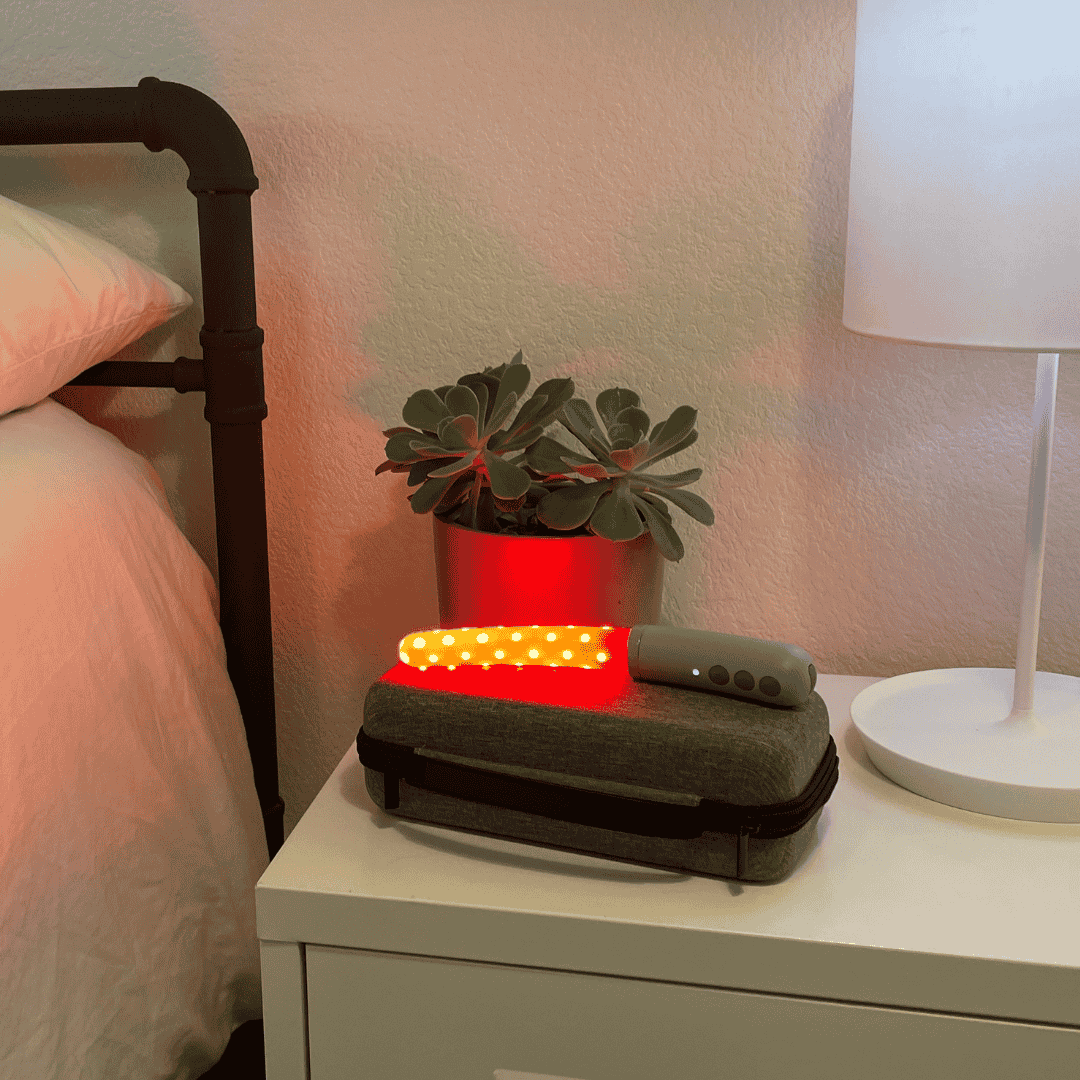
One of our missions at Fringe is to create high quality, evidence-based light therapy products, and to make them readily accessible to consumers. Our goal is to help people heal from the conditions that commonly ail them – like arthritis, post-exercise muscle soreness, and eczema (just to name a few) - in the comfort of their own homes.
Recently, we turned our attention to some of the more common conditions affecting women and those born female at birth specifically: disorders of the female pelvis. Disorders related to female pelvic health (including pelvic floor pain and dysfunction, urinary incontinence, sexual dysfunction, and vaginal infections) are incredibly common, affecting up to 50% of the population at some point in their lives.

Enter, the fringe pelvic wand
In response, we made the Fringe Pelvic Wand - which combines light therapy with vibration, two well-established healing modalities - which may support recovery from these challenging issues.
What is red light?

Light therapy (also known as photobiomodulation) is the application of light with specific wavelengths to the body for the purposes of influencing biology. The most common form of light therapy uses red light, which is visible as the color red, and/or near infrared light, which is not visible but can be felt as heat. Blue light is also used in many light therapy products, mainly for its antimicrobial effects.
Red, near infrared, and blue light are naturally produced by the sun, which gives off solar radiation. The term radiation describes energy that is transmitted in the form of waves or particles. The spectrum of light in our environment consists of both light we can see (visible light) and light that our eyes can’t perceive (invisible light). This is called the electromagnetic spectrum. The visible light spectrum is quite narrow, consisting of wavelengths that range from 400 to 700nm and span from violet to red in color. Blue and red light are part of this visible light spectrum, while near infrared light is not. Different colors of light have different depths of skin penetration, with red and near infrared light penetrating the deepest.
While early research on light therapy used primarily lasers, more recent research has found that LED’s can also be used, which also have the advantage of applying light to a larger area of the body as well as an improved safety profile. The use of LED in red/near infrared/blue light therapy devices has also greatly reduced the cost of treatment, making it something that can be done in the comfort of one’s own home. Both laser and LED lights have been used in research and practice to support pelvic health.
Light therapy delivers light at a measurable level of intensity, which can be generally classified as low, moderate, and high. The intensity of sunlight is between 20 and 40mW/cm2, which is described as the “sweet spot” between higher intensities, which can have harmful effects, and lower intensities, which will have no effect at all. This range is optimal for healing while minimizing adverse effects, and is the range used in the Fringe Pelvic Wand.
How might light therapy support female pelvic health?
Light therapy may have physiological effects related to female pelvic health, including:

Tissue Rejuvenation
Loss of connective tissue, such as collagen and elastin, in the female pelvis is commonly experienced by women as they age and can also occur because of childbirth and infections. Through its effects on mitochondria, light therapy (especially red and near infrared light) may increase cellular energy production and increase connective tissue production. Light therapy may also modulate the production of reactive oxygen species, causing a shift towards tissue rejuvenation rather than breakdown, and may support muscle strengthening.

Reduced Inflammation & Pain
Chronic pain is commonly associated with disorders of the pelvic floor, which may also be associated with pelvic inflammation. Light therapy (especially with red and near infrared light) may have powerful effects on inflammation. Studies have found that light therapy may affect levels of many molecules involved in inflammation, including reactive oxygen species, reactive nitrogen species, and prostaglandins.

Increased Blood Flow
A decrease in blood flow to tissues in the female pelvis, especially the vagina, occur with age. This loss of blood flow negatively affects tissues by reducing the supply of oxygen and nutrients and contributes to age associated changes such as vaginal atrophy. Light therapy (especially red and near infrared light) may increase blood flow in two ways. First, it may increase levels of nitric oxide through its effects on the mitochondria, which causes vasodilation. The dilation of blood vessels allows more blood to flow through. Second, it may increase angiogenesis, which is the synthesis of new blood vessels. A greater density of blood vessels may increase the delivery of blood to tissues.

Effects on Microorganisms
Infections with pathogenic microorganisms in the female pelvis are quite common, and include bacteria (such as chlamydia), fungi (such as candida), and viruses (such as HPV). The vagina also naturally hosts the vaginal microbiome, which has a balance of microorganisms. When imbalanced, susceptibility to infections and bacterial vaginosis is increased. Light may have effects on microorganisms, both pathogenic and non-pathogenic. Blue light may have powerful effects on pathogenic microbes that can infect the vagina, such as candida, while red light may have positive effects on the microbes that comprise the microbiome, including the vaginal microbiome.

Some clinical conditions related to female pelvic health that may improve with light therapy include:
- Vaginal candidiasis
- Human papillomavirus and associated vaginitis and cervicitis
- Vulvovaginitis
- Chronic pelvic pain
- Urinary incontinence and sexual dysfunction
- Overactive bladder
- Interstitial cystitis/bladder pain syndrome
- Menopause
- Episiotomy recovery
What is vibration therapy?

Vibration therapy may have physiological effects related to female pelvic health, including:
Tissue Rejuvenation
Vibration therapy may have many effects on cells associated with the structural integrity of the female pelvic. Collagen in particular may respond to vibration therapy, especially at low magnitudes, and both collagen and muscle formation respond well to low magnitude vibration at between 8 and 10Hz.
Increased Blood Flow
Vibration therapy may increase blood flow, after as little as 10 minutes of therapy. Increasing blood flow helps to perfuse tissues with oxygen and nutrients and improve function and speed healing.
Muscle Tone Regulation
While proper functioning of the pelvic floor muscles is integral to bowel, bladder, and sexual health, in many women these muscles are weak. Others experience chronic hypertonicity in muscles of the pelvic floor, which is also suboptimal. Vibration therapy may regulate muscle tone in two ways. First, it may decrease spasticity in muscles that are overactive. Second, it may improve the potential to voluntarily contract muscles, such as those of the pelvic floor, which are poorly controlled in between 30 and 50% of women, and in this way activate and strengthen the muscle. Muscle tone regulation is accomplished by activating muscles via a spinal reflex and increasing blood flow.
Decreased Pain
Vibration therapy may reduce many different pain types, including neuropathic pain, low back pain, and muscle pain. This may happen via several mechanisms, such as regulating muscle tone and increasing blood flow.
Some clinical conditions related to female pelvic health that may improve with vibration therapy include
- Urinary incontinence
- Pelvic floor dysfunction
- Vulvodynia (a pelvic pain condition)
- Pelvic pain penetration disorder
- Sexual dysfunction
The Fringe Pelvic Wand
The Fringe Pelvic Wand delivers three wavelengths of light via three modes:

+ Mode 1 - Deep Rejuvenation
MODE ONE - red/near infrared light (630nm & 830nm): delivers both red (630nm) and near infrared (830nm) light to the pelvic tissues. This mode may help with pelvic pain and inflammation; bladder and muscle health; optimizing the vaginal microbiome; increasing the production of collagen and elastin; and improving blood flow and tissue health. Use Mode 1 for deep pelvic rejuvenation if you are NOT sensitive to light or heat.
+ Mode 2 - Antimicrobial
MODE TWO - Blue Light (415 nm): delivers blue light (465nm) to the pelvic tissues. This mode may support the destruction of microbes including fungus and bacteria and healing from yeast infections and bacterial vaginosis.
+ Mode 3 - Rejuvenation
MODE THREE - Red Light (630 nm): delivers only red (630nm) light to the pelvic tissues. This mode may help with pelvic pain and inflammation; bladder and muscle health; optimizing the vaginal microbiome; increasing the production of collagen and elastin; and improving blood flow and tissue health. Use Mode 3 for pelvic rejuvenation if you ARE sensitive to light or heat.
The Fringe Pelvic Wand also delivers optional vibration, via four modes:

+ Mode 1 - 10hz (default mode)
MODE ONE: provides very low frequency vibration which may help to support muscle relaxation and pain reduction.
+ Mode 2 - 50hz
MODE TWO: provides low/moderate frequency vibration which may help to support muscle relaxation, reduce pain, and increase awareness of pelvic muscle function. Mode 2 can be combined with gentle pelvic floor exercises.
+ Mode 3 - 90hz
MODE THREE: Provides moderate/high frequency vibration that increases awareness of pelvic muscle function and may help to support pelvic muscle contraction. Mode 3 can be combined with moderately active pelvic floor exercises.
+ Mode 4 - 120hz
MODE FOUR: provides high frequency vibration that may help to support strengthening of pelvic muscles. Mode 4 can be combined with active pelvic floor exercises.
Let's get started
How to use the fringe pelvic wand

Light & Vibration Therapy Safety
The safety of light and vibration therapy has been demonstrated in thousands of research studies. However, there are some precautions to be aware of before you begin your therapeutic journey.Photosensitivity is the main contraindication to light therapy. If you are sensitive to light or are using medications that increase light sensitivity (see https://www.ncbi.nlm.nih.gov/pmc/articles/PMC7672668/ for a recent list), you may need to reduce treatment time, interval, and/or frequency, as well as reduce light intensity.
 Light & Vibration Therapy Safety
Here are some other precautions to consider.
Please don’t:
Exceed the recommended treatment times and frequency.
Use on open fresh wounds.
Use in combination with lotions, balms or other topical products that contain heat producing ingredients.
Use with a non-water based lubricant.
If you’re pregnant, we recommend checking with your health care provider to see if they think it’s appropriate for you to use the Fringe Pelvic Health Wand. They can assess your unique health needs and determine if light and vibration therapy is right for you. However, we do know that it’s a great tool to use postpartum when it may help to support healing and recovery of pelvic tissues.

Co-Author
Elizabeth Frey, FCAMPT, MCISC (MANIP), MSc. PT, MSc, BPHE, BSc, MCPA - Fringe Pelvic Health Advisor
Liz holds a BSc and BPHE from Queen’s University; a MSc in Exercise Physiology from the University of Toronto, a MSc (PT) from McMaster University, and a MCISC (Manip) from University of Western Ontario. Liz is a clinic owner and practicing physiotherapist with a specialty in pelvic health physiotherapy. She is a clinical lab facilitator at the University of Toronto, and a clinical supervisor for physiotherapy students. As an orthopaedic and pelvic health physiotherapist, Liz integrates her over 10 years of clinical expertise to provide a unique whole-body approach to wellness. Liz’s practice focuses on helping women navigate pregnancy, menopause, and everything in between.
The contents in this blog; such as text, content, graphics are intended for educational purposes only. The Content is not intended to substitute for professional medical advice, diagnosis, or treatment. Always seek the advice of your healthcare provider.


22 comments
There is some promising research that supports the use of red light therapy for dysmenorrhea (painful menstruation), and yes – we have many anecdotal reports from users who have experienced benefits. A well controlled clinical trial of subjects with dysmenorrhea found that pain was reduced significantly more in those who received light therapy compared to those who received a placebo light (https://pubmed.ncbi.nlm.nih.gov/26797192/). Several animal studies have attempted to unravel the mechanism by which light therapy is exerting this effect, and have found that it reduces inflammation (https://pubmed.ncbi.nlm.nih.gov/38348528/) and oxidative stress (https://pubmed.ncbi.nlm.nih.gov/39892163/). While the pelvic wand may be effective, most research has used light applied to the exterior of the body. We’ve had many people report good outcomes using a red light therapy wrap placed over the abdomen, similar to the way you would apply a heating pad. An advantage of the wrap is that it is cordless and portable; when secured using the velcro strap, it doesn’t require the user to stay stationary during the session. One important difference to note between red light therapy and the use of a heating pad is that sessions should be limited to once every 24 hours. This is because of the mechanism of red light therapy, where benefits are seen within a “dose range” of light that can be exceeded if treatment times are too long or too frequent. Our recommended treatment time and duration to support menstrual cramps is once per day for 20min per session. Our wraps have a built in 20 minute timer so this is easy to adhere to. We always recommend consulting with your health care provider before starting red light therapy.
My adult daughter suffers often from debilitating menstrual cramps. Is there any evidence based research with the pelvic wand for helping with this condition? Or, perhaps, some recurring anecdotal success stories from users?
Thank you for this thoughtful question, and you are absolutely right to question the effect of blue light on healthy bacteria in the microbiome. Unfortunately, at this point we do not have evidence that shows whether this would happen or not. To our knowledge, there is a single study that investigate the effect of blue light on healthy microbes in the vagina following intravaginal administration (https://pubmed.ncbi.nlm.nih.gov/30406341/), and while that study found no harmful effects, it has serious limitations – specifically, there was only a single blue light session and the study included a very small number of participants. Recent research has shown that good bacteria in the microbiome of both the skin and the mouth can be affected by blue light, so we should exercise the cautionary principle and assume that this may also happen in the vagina. For this reason, we recommend only using blue light when there is evidence of pathogenic bacteria (like bacterial vaginosis or candida) and limiting sessions to 3x per week for 5-10 minutes per session until symptoms have resolved. A preventive protocol for someone with a history of infection would be 1x per week for 5 minutes, for use during times of elevated risk (for example, post-antibiotics). Complementary microbiome support could also be used concurrently, including vaginal probiotics.
Could the blue light that eliminates harmful bacteria also eliminate good bacteria? What’s the protocol with usage on the blue light?
Hi Brittney, Thanks so much for your question! We actually get asked about this quite a bit. To keep things safe when using the pelvic wand with multiple people, we recommend using an Ultrasound Probe Cover. This will ensure that the light still shines through while preventing direct contact between the wand and your patients. Here’s a good option you can check out on Amazon: https://www.amazon.com/dp/B0CSFTNBKD?ref_=ppx_hzsearch_conn_dt_b_fed_asin_title_1
That said, we would also like to mention that the best results from red light therapy come from consistent, low-dose sessions. So, while using the wand in your clinic is great, your patients may see even better results if they’re able to use it regularly at home.
I hope that helps!