


Ischemic stroke is a type of cardiovascular disease in which the blood flow to the brain is disrupted. Annually, close to 800 000 people have strokes in the US, with an economic cost of close to 57 billion dollars. Although some people recover fully from a stroke, it can cause permanent disability and death. The risk of stroke increases with age, but it can occur across all age groups.
One little-known lifestyle factor that influences our cardiovascular system health is sunlight. In contrast to our ancestors, who spent approximately half the day exposed to sunlight, our modern lifestyles have us spending close to 90% of our lives indoors. This reduction in sun exposure is increasingly being recognized as a “real public health health problem”. Exposure to the primary wavelengths of light that are found in the sun – which are red and near infrared light – can be supplemented using red light therapy.
Red light therapy is the application of artificially generated light in the red and /or near infrared spectral bands. The term “red light therapy” usually describes the use of both red and near infrared light, although only the red light produced by the device is visible to the naked eye. Infrared light can still be perceived by the body as heat when it contacts skin. The red light used in light therapy usually ranges from 600 to 700 nanometres (nm), with the unit nm referring to distance the light wave travels in one cycle. The near infrared used in light therapy usually ranges from 800 to 1100nm.
Red light therapy has shown small, but promising, effects in studies with stroke patients. Using near infrared laser light technology, it was found that treatment improved outcomes when used within 24 hours after a stroke. A larger follow up study showed smaller effects, but there was still a positive trend towards better outcomes.
Studies in animal models have shown many benefits when light therapy is used shortly after a stroke occurs. These include increasing the production of new neurons (neurogenesis), decreased inflammation, and improved mitochondrial function. The effects of light on mitochondria is very important in improving stroke outcomes, since mitochondria are responsible for protecting and maintain neurons. Light therapy may work synergistically with other non-invasive treatments for stroke, such as Coenzyme Q10.
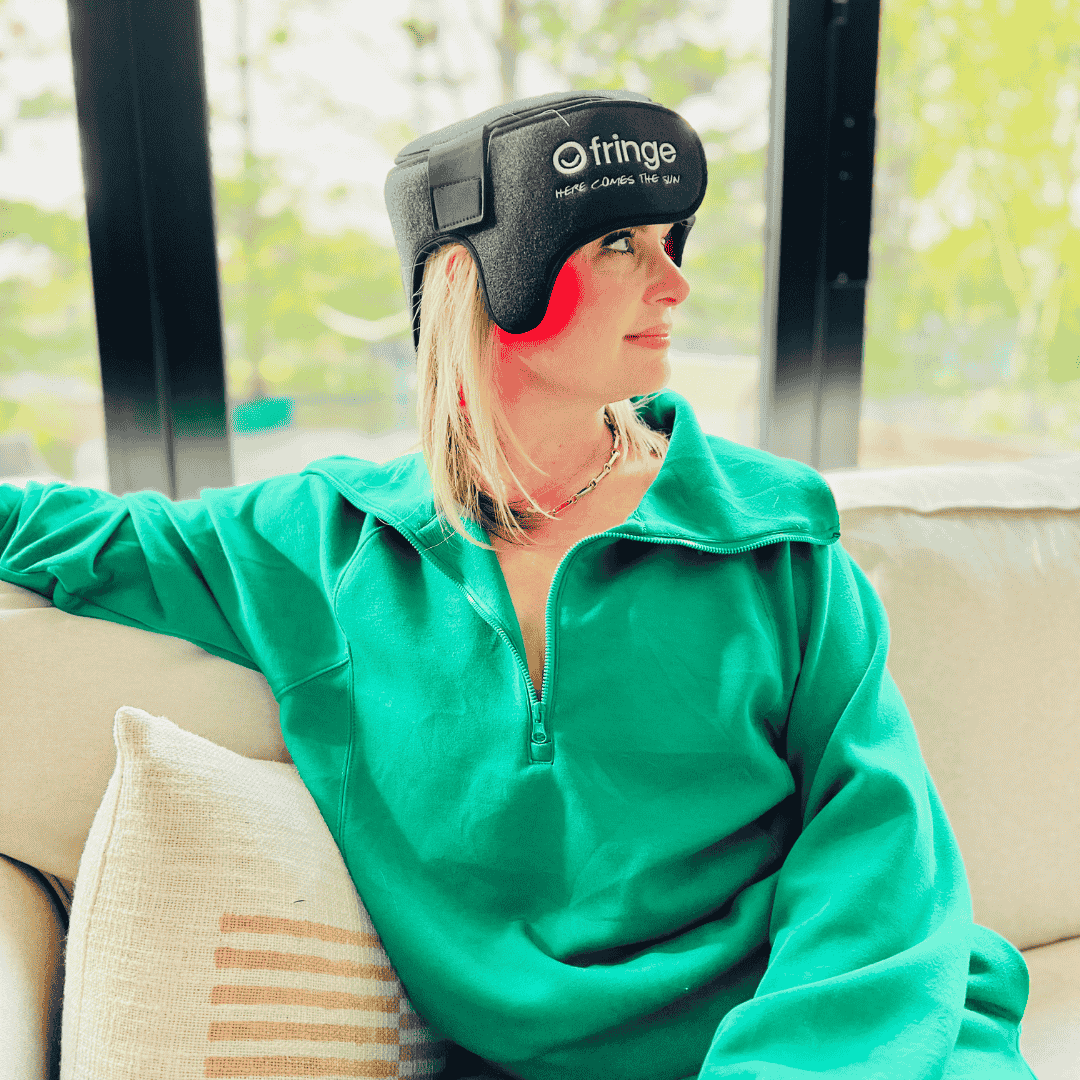
When using red light therapy to support stroke recovery and the cardiovascular system of the brain, the Fringe red light therapy head wrap is the best option. With wavelengths of red (650nm), near infrared (810nm), and deep penetrating near infrared light (1050nm), it delivers light to the front, back, and sides of the head. Unlike most devices on the market, the Fringe red light therapy head wrap is wireless and flexible, making it both comfortable and portable.
For more information about Fringe light products, go to: https://fringeheals.com/shop-all-products/


8 comments
I have seen in studies that we should use red light therapy only on the effected area of stroke patient. Meaning a left stroke patient should be only applied treated with red light on the left side of the skull. I am confused now since people sell devices which treat the whole head/skull with red light therapy in the form of a helmet. I. The study said that it could make a condition worse in the case of a treating a stroke patient on both sides of the skull as Dr Naesser said in many videos ? Please explain ?
Hi Sandra!
As part of the care team, you’re definitely in the best position to understand the situation. We can’t give medical advice, but in the case of hemorrhagic stroke (vs ischemic stroke) the research shows that red light therapy should only be used during rehabilitation, rather than during the acute phase of the injury. Hope that helps!
If you have any additional questions we’re happy to help at hi@joinfringe.com, or you can reply to this comment!
Hello, could this device be used on a client who had a hemorrhagic stroke?