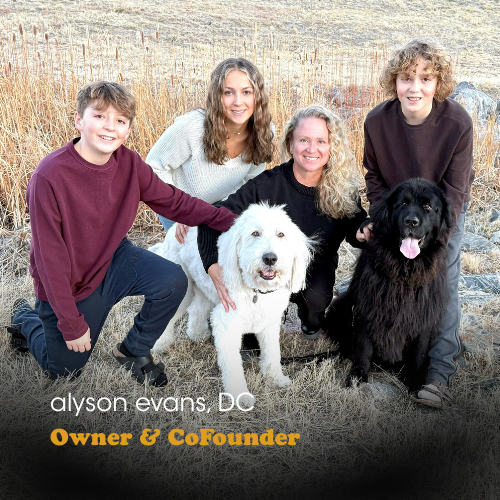
Alyson and Anthony, co-founders of Fringe, sit down together for the first time to tell the story of how the company came to be. It starts in 2015–2017 at RockTape — where they first worked together, Alyson growing the medical channel and Anthony running retail and distribution — and picks up in 2018 when the company was acquired and they found themselves navigating a corporate transition that didn't feel like theirs. By 2020, in the middle of a pandemic, Alyson made the call: let's build something new. Anthony said yes.
The early years were nothing like either of them expected. They launched into the CBD space (a sector they still believe in but couldn't openly discuss), couldn't run ads, and had their payment processor hold their revenue for months. What got them through wasn't a playbook — it was grit, agility, and the refusal to quit. Anthony distills it simply: you need all three, and you need them over a long time. They're candid about the lows, the panic attacks, the revolving door of early-stage hires, and what it means to bet on something when failure is very public.
The episode closes on what actually matters to both of them: helping people feel better, empowering customers to take ownership of their health, and building a workplace where their 16–17 person team can genuinely thrive. It's a rare, unfiltered look at what it actually takes to build a brand from nothing — told by two people who are still in it.
Transcript
Alyson: Welcome everybody to the Fringe. My name's Alyson. This is Anthony. We are the co-founders of Fringe. We're here today to tell you a little story about what it takes to go build a company like Fringe.
Alyson: The story dates back — right now it is January 2026 — to 2015, 16, 17 when you and I were working together at a company called Rock Tape.
Ant: Wow. It's been a while.
Alyson: It's been a long time. That's where we met. I handled a lot of our medical channel and growing our medical business. For those who don't know Rock Tape, that's the sticky kinesiology tape. And then you came in and really cleaned up our retail space, our online retailers, and distribution. In the end of 2018, Rock Tape sold. And I think that's really where the story of Fringe kind of begins as an idea. When Rock Tape sold, I think you and I both loved our teams, we cared a lot about the people we worked with, we cared about the brand because we had built it. And when we were bought, you and I went to work for the large company that bought Rock Tape. And you moved across the country and really went all in. For me, that's where the idea of Fringe began. And it was probably 2020, in the middle of a full on pandemic, where I just said: I got this thing I want to go do and I don't want to do it without you.
Ant: That was a strong sentence. End of 2018, sold, moved out here to North Carolina — raised in NorCal my whole life. The company that bought us was based out of here, so it really came together for us. To be completely open, we came into the acquisition really wanting to make it work. But we were in an environment that was in its own stage of evolution. It felt kind of startup-y, but also large at the same time. We tried for a couple of years. There were some successes, some failures. No shade to that situation. It just wasn't ours. And I think when you were like, hey, I've got this thing I want to do — I was standing in my garage, probably heating up food in the microwave, talking on the phone. And you said, I think we can go do this. I felt like at that time, we had done what we could do in that transition environment. The timing felt right, even though it was crazy — middle of a pandemic. In hindsight I'm glad I didn't think too much about it. I'm a big faith guy and very much feel like things are written. And there were two things I needed to decide. One: if I was dying, would I regret not doing this? The answer was an unequivocal yes. And two: am I okay with very public failure? I had to be able to say yes to that. And then you're just in it and churning.
Alyson: Something happened very quickly during that acquisition and it wasn't positive. Anyone who's been involved with companies being bought and sold and private equity being involved — the heart and soul of a company gets lost in the transition. Anyone can go make products. But the thing you feel about a company is really the heart of the people behind it. I was in a full send stage of my life. This was my third company. I was going to go in the middle of a pandemic, get a divorce, I had three kids, and I had a big corporate job I was just going to walk away from. The thing I always credit when people ask what's been the trick to growing Fringe — it's really that I knew I didn't want to do this alone. And I also knew I'm not made to run a company. I'm really good at the ideas and the vision and the fuzzy, rainbow-y description of leadership. But I couldn't run a company. I had enough experience of companies not being well run that I didn't want to sign up for that. So I came to you with: I have this idea. In many ways it's a continuation of a path I've been on for a long time. I'm in alternative healthcare, natural healthcare — I just call it healthcare. I care about people feeling well. I'm a chiropractor. I have cared about this for 30, 40 years. I wanted to go create a brand that could be all-encompassing with no limitations. And I had this idea that what we would start out doing would be nothing close to what we would end up doing.
Alyson: The name Fringe — chiropractors, naturopaths, acupuncturists, basically anything that isn't mainstream medicine — they're always referred to as the fringe of medicine. That's implied to be a bad thing. The fringe of science, the fringe of politics, everything fringe is sort of referenced as: well, you're not with us. And I was listening to a group of people say, well, they're the fringe of the profession. And I was like, why is that bad? Everyone I know who has helped so many people is for sure an outlier. Fringe by definition is unconventional or the outside borders of a group. That's really where I've always been and where I feel like I belong. And I feel like way more people belong there than they realize. Now from a business standpoint, we are Fringe. If that means you question the norm and have a very open mind to ideas that may not be mainstream, sign me up. That name took on a life of its own.
Alyson: So the idea was brewing and we took the jump in 2021. You should tell everybody what the first week of our business was like.
Ant: Everyone knows starting a business is hard conceptually, but until you do it and encounter the hard, it's almost never the type of hard you think it's going to be. And that makes it harder. We launched a business, we started selling things, and immediately our credit card processor said: we're not giving you any of your funds for a while. We started as a CBD company, and even though everybody knew that, all of a sudden they were just like: nope, we're not depositing your revenues. So we were selling things, we needed to buy things, we needed to spend money, but we had no access to our funds. Not a day or two. Not a week or two. A month or two or more. We came in with the idea of a playbook: we'll run social ads. Nope, can't do that. We'll do this. Nope, can't do that. From the jump, things went haywire in really impactful ways. We can't sell anything. We can't tell anyone what we do. And even the people who find out about us — basically our friends and family — if they buy something, we have no access to that money. And that set the tone for the last five years. Our disposition, for better or worse, is we have way more fight than flight. It was just: okay, this is how it is now. And it continued like that for years.
Alyson: Four years, really. I think there's something where when people tell me no, that's about all I need to make sure that will be a yes at some point. The industry we started into — I still feel so strongly that it's such an important part of people's options for health and healing. But I also care more about building a business that can help a lot of people. And you can't help a lot of people when you can't talk about it. So we started in the fringe of the fringe of the fringe of industries. We had to become agile. We leaned heavily into very grassroots growth tactics. Our money was so lean that spending wasn't even an option. We are privately funded by myself and by Anthony — for better or worse it made us have to make decisions where there weren't many options. A lot of companies get a lot of funding upfront. We would have wasted a ton of investors' money in the first two, three years. We didn't have the option to do that. So we just white-knuckled it. The hardest part for me was the revolving door of people that come and go in a startup. When you're a people person, you really develop a gut for startups. And when people ask how we did it, I often say: you don't quit. Every corner you turn, you're like: this would be way easier to quit. And you just don't. It's not an option. So then you have to figure it out. But that's not for everyone.
Ant: It's for very few people. There are no tricks, no tips, no hey do this, do that. Every business and every scenario is so unique. What we've learned is you have to have the grit to not give up. You have to have the agility to be able to adapt. And then you need to do both of those over a really long time period. Grit, agility, endurance. And I had panic attacks in the middle of the night and went to those deep dark depths that very few people ever even approach, let alone work through. And then you just keep going. If I knew then what I know now, I don't know if I'd say sign me up. People say to me, that was so smart, that was so brave. Neither of those things is true. I just have very well-timed bouts of productive insanity. When I want to do something, my brain shuts off and I say yes. And then I wake up and I'm in it, and the best way out is through.
Alyson: Yeah. And then the crazy thing about being in it is it's just failure after failure after failure. People who can handle that are well-suited for a startup environment. We're so accustomed to sharing highlight reels, but if you were to make a clip of lowlight reels, there's 10 times more. Maybe 100 times more. That probably goes for our lives too. I think people would look at me and say, she's been so successful. It's just a series of lowlights that I worked through. The relationship you develop with failure — which is just: that didn't work as we thought it was going to — and how quickly do you correct course. For me, I correct course really fast. That didn't work, let's go quickly find something that did. And I'm a massive worst-case scenario planner. So even when something doesn't work, it's like: but it wasn't the worst case scenario I drew up. We're still cruising here, everybody.
Alyson: Your conviction — for you, a lot of it is your faith. For me, it's a very deep sense that I'm doing what I'm supposed to do. That has always been in this category for me. From a very young age, I knew I wanted to be a helper in medicine. I was drawn to the natural side of medicine from a very young age — high school — and knew this is what I would go and do. I had no idea I would end up growing businesses and using this platform to be a helper. But it's a deep conviction inside me that I want to help people feel better. I don't have to do that with my hands one-on-one. I just know that what I'm working on every day needs to be contributing to that in some way or form. To create Fringe and then have a group of people working for Fringe who can start to feel that too — just today you shared some testimonies, reviews that come in every day. We don't know these people. And then they email us or call us or DM us and share very personal, impactful stories about how what we created helped them. When your battery's low and those come through — that's the conviction. So for me, the thing I care about most is helping people feel better. I'll ask you: what matters to you when it comes to running a business?
Ant: I actually don't think our convictions are different. I think our tool chests are just different. You care about helping people and have the background you have. I care about helping people and have the background I have — economics, business, people management. When you said hey, I want to go do this thing, I was like: so long as that thing is generally positively contributing to the world, I'm in. My deep conviction is that work is killing people. Stress is killing people. And it's highly tied, at least in Western cultures, to the jobs people have. Being in companies — it's like: this can be better. We can do this better. It's significantly harder to choose to run a business the way we choose to run this business. But I think if we can actually scale this thing to a place where it becomes visible to other businesses, and we can show: hey, you can do it this way — and not only can you do it this way, it can thrive this way in a very economically viable way — that's my conviction. My background in economics allows me to tie subjectivity to the economics and the language of commerce. If you look at bad culture in a business — something like 15% of employees' time is spent wishing they didn't work for you. There are literal dollars you can assign to that. You pay that person a salary. 15% of their salary is being wasted by them hating their job. Plus the opportunity cost of them not driving incremental revenues. When you put those dollars to companies, it's a lot of money very quickly. And I'll say, forgive the language, but it costs you money to be a dickhead. If that's the only language you speak, that's a reason to entertain a different approach. That's my conviction: I want to help people too. And I think that's how I can do it. And I think we're doing pretty good.
Alyson: The second thing I care a lot about — and I think it's your second too — is the customer. The way I care about it comes from my background. I care that the customer feels very empowered by the information we bring to them, the products we bring to them, how we approach talking about healthcare. This matters so much to me — that people feel like healthcare is accessible to them, that these tools out there in the industries are available, that they can become educated about them, that they feel empowered to take more ownership in their healthcare journeys. I'm perplexed and bothered by a lot of the current traditional medical industry where people go in, they're told they need this medication or surgery, and they just do it without asking: why shouldn't I? What are my other options? Could something go wrong? I care so much about empowering our customers to learn and to provide alternatives for their health. And any interaction with us — you should leave feeling like we genuinely care. That's the leadership, Anthony and I, but it's infused all the way down.
Ant: Absolutely. It's infused and it's empowered. Anyone on our team will never get in trouble for trying to do the right thing for our customer. I don't care how badly that went. The intention was correct. You can't do it just for the numbers — it short circuits the impact of these approaches. You have to actually care about the customer. I don't understand how, if you're in a business, you could treat your customer like an annoyance. Do you know who pays our salaries? If people stop buying stuff from us, we all lose our jobs. That disconnect, that distance from the customer never made sense to me. I'll give an example from a previous job: a customer wanted to exchange something that broke. It was international. I was involved, the EU head was involved, the head of Asia was involved, the CEO was involved — all talking about whether to do this replacement. With our salaries, that 30-minute conversation probably cost the company a thousand dollars. The item we were talking about replacing costs $6 to manufacture. This customer is pissed because they're not getting an answer. We're lighting cash on fire. This makes no sense on either side of this equation. Just be better. Just be nicer. If not for the reason of just being nice, then for this reason.
Alyson: Yeah. Anyway — help your customers. At this stage, how many people work at Fringe now? This is 2026, everybody.
Ant: We've got full-timers, contractors who are highly involved, and part-timers. I define it by who's on our biggest internal email list. I think we're at 16-17 now.
Alyson: Right. 16, 17 people who work for Fringe. And that is — if I had to pick three things I care about: I care about helping people feel better. I care about empowering our customer to feel like they can take leadership and ownership in their healthcare journeys. And the third thing is taking care of the people who work for us. I think about their time with their families, what their lives look like working for Fringe, do we provide them an opportunity to really step into a life they thought they couldn't live. I'm a mom of three teenagers — those are the things I care about. And when you and I get on calls, you always reference their professional growth as people. How can this job better them?
Ant: Yeah, that's everything. The customer experience is never going to exceed the employee experience. We can't authentically have our customers feel a way about Fringe that our employees don't. People who work at Fringe came to Fringe because they know how we feel about our people. Pretty much everybody, minus maybe one, who works at Fringe — we've worked with them already at some point over the last 15 years. The most sound economic proof I can give you for this concept: people quit their jobs and worked for Fringe for free for years. You don't get that from an approach you don't believe in. Just because of that conviction, this matters — very real care about this — meaning at some point this becomes what we want it to be. That's why this year is so exciting. We're starting to be able to deliver on all of this. The team is meeting up in a couple months and it'll be impactful. Just like, holy crap, that was wild. We all made it. No one died. Now let's get back to some of those concepts we talked about when we launched. And I'm stoked for that to mean something for our team and our customers. And maybe people start noticing and we have some influence on other businesses. If not, we're over here doing our thing with our crew. And if it's providing for us on all levels — not just financially — I would call that a success.
Alyson: Would, I would too. I looked at his flip-flops standing at a professional medical event where everybody was in dress shoes, khakis, and polos, and said: yeah, this guy and I are going to start a company someday. And it's going to be a great ride. We stay ourselves, wear what we want to wear, say what we want to say, do what we want to do. That should invite everyone who becomes an employee here to have that feeling of safety. And our customers should feel that too. I'm going to go make a bunch of new products this year for Fringe. I make them because our customers email us and say, you guys should do this, or do you guys have this? And that's the most fun thing now — we're able to communicate with people and hear what they love, what they wish we would make. I'm making things I never imagined in a million years I would be making. Pretty fun.
Ant: Yeah, it's exciting. Thanks everybody. Bye.
Alyson: Thanks everyone for listening. All right. Bye, everyone.